

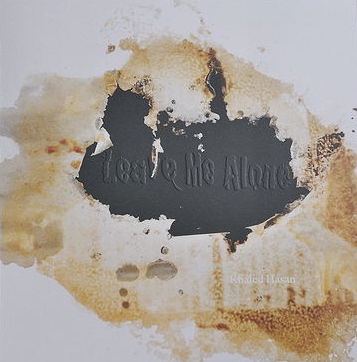
Leave Me Alone
Khaled Hasan
Kaunas Photo
English and Lithuanian
Texted by Khaled Hasan, Ernesta Butkuviene and Maira Dudareva
Softcover
Edition of 500
64 pages
220 x 220 mm
2014
ISBN 9786098032093
Most of the victims of acid violence are women. In Bangladesh, where acid is cheap and readily available, acid violence is a horrifyingly common occurence. Photographer Khaled Hassan turns the camera on these women and the stories behind the acid-burnt faces. Acid violence is a worldwide phenomenon, and the countries with the highest rates of attacks are Bangladesh, Pakistan, Cambodia, Nepal, and Uganda. In Bangladesh, 80 percent of the victims are women, many of them below the age of 18. It is always their faces that are targeted, leading to disfigurement and blindness. In the last 10 years, there were 3,000 victims of acid attacks. Land disputes, dowry, personal jealousy, family and business feuds, rejection of marriage proposals or sexual advances can all spur an acid attack. In Bangladesh, acid is easily available and the laws for its commercial use are lax. Nitric or sulfuric acid, used in the attacks, can be bought from the black market for as low as $1 to $5. Acids used in manufacturing industries such as dyeing, cotton, rubber, or jewelry making, or acid used in school and college laboratories, often find their way to the black market. There are only a few beds for burn injuries in the government-run Dhaka Medical Hospital in the capital. Acid melts the tissues and even dissolves bones. Often eyes and ears are permanently damaged. Many victims have to undergo dozens of reconstructive surgeries to lead a functional life. No funding is available for cosmetic surgery, and most victims are from rural areas, so they cannot afford expensive procedures. There is little scope for rehabilitation, counseling, and long-term care. Even though a 2002 law made acid violence punishable by death and imposed a no-bail policy for perpetrators, acid violence continues to be a common problem. My project is a quest to understand what lies behind the acid-burnt faces and to tell their stories of survival and healing.
(source: http://www.khaledhasan.com/books-prints/)
About the Artist
Khaled Hasan (born 1981, Dhaka, Bangladesh) began working as a photographer in 2001. At a young age he adopted photography as a part of his identity—a force that makes him think, feel and understand human beings and the human condition. As an indigenous photographer, he tells narratives of the land that shaped him. Stories about its people and their interaction with nature, healing and surviving in times of distress, toiling for food, and standing against injustice are the primary issues featured in his works.
khaledhasan.com
(source: http://www.khaledhasan.com/about-me-khaled/)
About the Publisher
The Kaunas Photography Gallery extends the long publishing tradition in Lithuania, and now not only concentrates on simply presenting photographers, but also on continuing research into Lithuanian photography. Thanks to its successful publishing activities, Lithuanian photography is winning greater recognition than ever before. It is gradually becoming more acknowledged on the international scene, and is featured at major international photography book events.
shop.kaunasgallery.lt
(source: https://shop.kaunasgallery.lt/en/about/)


